
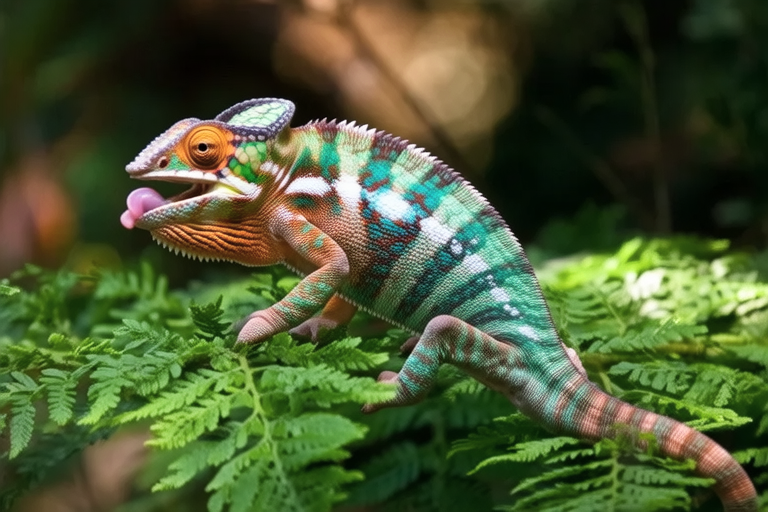
The Marvels of Chameleons: Color-Changing Wonders of the Animal Kingdom
Chameleons are one of nature’s most fascinating creatures, renowned for their remarkable ability to change color. This unique characteristic has intrigued scientists and fascinated people for centuries. Beyond their well-known camouflage abilities, chameleons utilize their vibrant hues for communication, mood expression, and temperature regulation. Let’s delve into the world of chameleons, exploring their unique characteristics, the science behind their color-changing mechanism, and the importance of conserving their natural habitats.
The Science Behind Chameleon Coloring
Chameleons change color through specialized cells called chromatophores, which are found in multiple layers beneath their transparent outer skin. These cells contain pigments that reflect and absorb light, allowing chameleons to alter their appearance. The top layer of chromatophores contains yellow and red pigments, while the middle layer houses blue and white guanine crystals. The bottom layer consists of melanin-containing chromatophores, responsible for black and brown shades.
The process of changing color involves the expansion and contraction of these cells. When a chameleon wants to change its color, it sends signals from its brain to the chromatophores, causing them to expand or contract. This alters the way light is reflected off the surface of the cells, resulting in visible changes in color.
Functions of Color Changing
While camouflage is the most recognized function of chameleon color-changing, it serves several other purposes. Chameleons use their vibrant hues to communicate with others of their kind, express emotions, and regulate body temperature.
Communication and Mood Expression
Chameleons rely on color changes to convey messages to potential mates or rivals. Males, for instance, may display bright, vivid colors to attract females or intimidate competitors. Conversely, when a chameleon feels threatened or stressed, it may darken its color to blend into its surroundings or appear larger and more intimidating to predators.
Temperature Regulation
Chameleons also use color changes to control their body temperature. Darker colors absorb more heat, while lighter colors reflect it. By adjusting their color, chameleons can maintain an optimal body temperature, ensuring efficient metabolism and overall health.
Species-Specific Coloration
Different chameleon species exhibit distinct color ranges and patterns, reflecting their unique adaptations and evolutionary histories. Some notable examples include:
- Bee Hummingbird Chameleon (Calumma cucullata): This small chameleon displays vibrant greens, blues, and reds, blending seamlessly with its lush forest habitat.
- Parson’s Chameleon (Calumma parsonii): Known for its impressive size, this species showcases striking yellows, oranges, and browns, often displaying intricate patterns during courtship rituals.
- Veiled Chameleon (Chamaeleo calyptratus): Native to Yemen and Saudi Arabia, this species features bold stripes and spots in shades of green, yellow, and brown.
Recent Research and Studies
Advancements in technology have enabled researchers to better understand the mechanisms behind chameleon color-changing abilities. For example, a study published in the journal Science Advances revealed that chameleons use nanocrystals to produce vivid blues and reds. These structures, known as guanine nanocrystals, allow chameleons to create a wide spectrum of colors without relying solely on pigment-based mechanisms.
Another groundbreaking discovery involved the use of advanced imaging techniques to observe chameleon color changes in real-time. Researchers employed high-speed cameras and spectrometers to capture the rapid alterations in color and pattern. This allowed them to analyze the precise timing and intensity of each color shift, providing valuable insights into the underlying physiological processes.
Conservation Efforts and Habitat Preservation
Despite their captivating beauty and unique abilities, chameleons face numerous threats in the wild, including habitat destruction, illegal pet trade, and climate change. Many chameleon species are endangered or vulnerable, prompting conservationists to implement various protection measures.
Efforts to preserve chameleon habitats focus on reforestation projects, protected area establishment, and sustainable land-use practices. Additionally, captive breeding programs aim to increase population numbers and reintroduce individuals into the wild. Public awareness campaigns educate communities about the importance of chameleons and their role in maintaining ecosystem balance.
Preserving chameleon habitats is crucial for ensuring the survival of these remarkable creatures and the countless other species that depend on their ecosystems. By supporting conservation initiatives and advocating for environmental protection, we can help safeguard the future of chameleons and the natural world they inhabit.
Conclusion
Chameleons are truly marvels of the animal kingdom, showcasing extraordinary color-changing abilities that serve multiple purposes beyond camouflage. From communication and mood expression to temperature regulation, these fascinating reptiles continue to captivate and inspire. As we deepen our understanding of chameleon biology and behavior, it becomes increasingly apparent that their preservation is vital for maintaining biodiversity and ecological stability. By supporting conservation efforts and protecting their natural habitats, we can ensure that future generations will be able to marvel at these incredible creatures.