
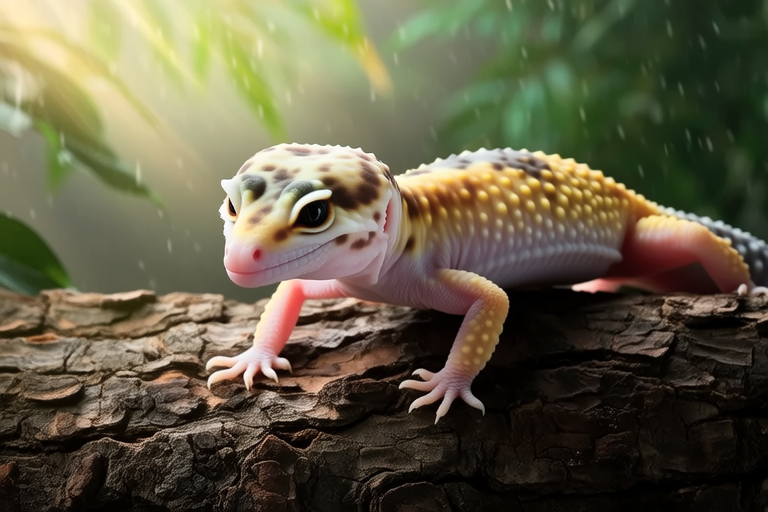
Chameleons Can Change Color—But What They’re Really Saying Is Shocking
Imagine a creature that can shift its skin from deep emerald to blazing orange in seconds, blending seamlessly into a leafy canopy or flashing a warning hue like a neon sign. For decades, this image has captivated our imagination: chameleons changing color to hide from predators, masters of disguise in the wild. But what if we’ve been wrong all along?
The truth is far more fascinating—and far more revealing—than mere camouflage. Chameleons don’t change color just to vanish; they do it to speak. To signal. To flirt. To regulate their bodies. The real story behind their kaleidoscopic transformations isn’t about stealth—it’s about communication, emotion, and survival encoded in pigment.
### The Myth of Camouflage
Popular culture paints chameleons as silent ninjas of the jungle, perfectly adapted to disappear into their surroundings. Yet, scientific research consistently shows that this is largely a myth. A landmark study published in *Biology Letters* (2015) observed chameleons in controlled environments where background colors were deliberately changed. Researchers found that the lizards did not alter their coloration to match the backdrop—instead, their hues shifted in response to social cues, temperature, and internal states.
Dr. Christopher Anderson, a biologist at the University of California, Berkeley, explained: “When a chameleon sees another chameleon, especially one of the same species, it changes color—not because of the background, but because of the presence of a rival or potential mate.” In other words, the color change is less about hiding and more about shouting.
### The Science Behind the Shift: Chromatophores and Hormones
At the heart of this transformation lie specialized cells called chromatophores—pigment-containing cells in the skin. These aren’t just passive color reservoirs; they are dynamic, responsive units working in concert. There are three main layers of chromatophores:
– **Xanthophores** (yellow and orange pigments),
– **Erythrophores** (red pigments), and
– **Iridophores** (which reflect light through nanocrystals, creating blues and whites).
The iridophores are particularly remarkable. They contain tiny, ordered structures that act like microscopic prisms. When these crystals reorganize—triggered by nerve signals or hormones—they scatter light differently, producing shifts in color without changing pigment at all. This mechanism allows for rapid, dramatic changes in hue and brightness.
But how does the brain command these cells? It’s not magic. It’s chemistry. Hormonal signals, primarily from the pituitary gland, trigger the movement of pigment granules within the chromatophores. Stress hormones like cortisol can cause a chameleon to turn dark and dull, while courtship hormones may prompt bright, vibrant displays.
A 2018 study in *Nature Communications* revealed that chameleons use a combination of neural and hormonal pathways to control their coloration. When a male chameleon spots a rival, his body releases adrenaline-like compounds that instantly activate the chromatophores. Within seconds, his skin turns aggressive reds and yellows—visible signals to deter competition.
### Mood and Emotion: A Skin That Speaks
Color change is also a direct reflection of internal mood. Just as humans blush when embarrassed or turn pale when afraid, chameleons display their emotional states on their skin.
When threatened, many chameleons darken their skin. This isn’t just about blending in—it’s an intimidation tactic. Darker colors make them appear larger and more threatening. Some species, like the Jackson’s chameleon (*Trioceros jacksonii*), have been observed turning nearly black when cornered, a visual warning to predators: “Don’t mess with me.”
Conversely, calm, relaxed chameleons often adopt soft greens and grays—colors that mimic leaves and branches. But even this isn’t always about concealment. A 2021 study conducted at the University of Glasgow showed that captive chameleons frequently displayed green hues during feeding or resting periods, regardless of background. This suggests that green is more of a “neutral” state than a camouflage strategy.
Interestingly, some color changes are involuntary. Dr. Devi Stuart-Fox, a leading expert in animal coloration, noted in her research that certain chameleons exhibit color shifts simply due to changes in ambient temperature. As their body warms, their skin can turn lighter to reflect heat and cooler tones to absorb warmth—a physiological necessity rather than a behavioral choice.
This dual role—both conscious signaling and unconscious regulation—reveals a sophisticated system that blends instinct, environment, and emotion.
### Courtship and Conflict: The Language of Color
Perhaps the most astonishing aspect of chameleon color change is its role in mating rituals. Male chameleons use vivid, contrasting patterns to attract females and intimidate rivals. During courtship, a male might flash a dazzling array of blue and yellow stripes, sometimes even displaying contrasting colors on opposite sides of his body—like a living split-screen.
In one striking example, researchers observed male veiled chameleons (*Chamaeleo calyptratus*) engaging in elaborate displays where one side of the body turned bright blue while the other remained green. This asymmetrical coloring served as a form of “dual signaling”—communicating both dominance and interest simultaneously.
Females, meanwhile, respond with their own palette. A receptive female may show muted greens and yellows, signaling openness to mating. If uninterested, she’ll rapidly shift to bold blacks and reds—clear rejection signals. In some cases, a female will turn so dark she appears almost black, a definitive “no.”
These exchanges aren’t random. They’re calculated, strategic, and deeply rooted in evolutionary biology. As Dr. Anderson notes, “Each color change is a message, and every message carries risk. Misjudging a rival’s intent could lead to injury. Getting the signal wrong with a mate could mean no offspring.”
Even more surprising: some color changes occur without any visible stimulus. In laboratory settings, chameleons have been observed shifting colors during sleep—suggesting that the nervous system continues to process environmental information subconsciously. While the function remains unclear, it hints at a level of neural complexity previously underestimated.
### The Unseen Costs of Color Change
While beautiful, this ability comes with trade-offs. Changing color requires energy. Studies indicate that chameleons expend up to 30% more metabolic energy during intense color shifts. This means that frequent or prolonged signaling can impact their survival—especially in resource-scarce environments.
Moreover, the very act of signaling can attract predators. A brightly colored male chameleon may be more visible to hawks and snakes, making his display a double-edged sword. Thus, the decision to change color isn’t purely beneficial—it’s a calculated risk based on context.
Researchers have also discovered that some chameleons lose their ability to change color after injury or illness. In one case, a wild-caught chameleon with a damaged optic nerve failed to respond to social stimuli with color shifts, remaining stuck in a single hue. This finding underscores the intricate connection between vision, brain processing, and skin expression.
### What This Reveals About Animal Intelligence
The complexity of chameleon color change challenges long-held assumptions about animal cognition. We once thought such abilities were simple reflexes. Now, evidence suggests otherwise.
Chameleons demonstrate intentional, context-dependent behavior. They assess their environment, interpret the actions of others, and adjust their appearance accordingly. This implies a level of awareness and decision-making not typically associated with reptiles.
Furthermore, the fact that they use color not only for survival but also for social interaction points to a rich inner life. Their skin acts as a biological screen—displaying emotions, intentions, and social status in real time. In this sense, chameleons aren’t just adapting to their world; they’re actively participating in it.
As Dr. Stuart-Fox puts it: “We’re beginning to see that animals aren’t just reacting to stimuli. They’re interpreting, responding, and communicating—sometimes in ways we’re only now learning to understand.”
### The Bigger Picture: Adaptation Beyond Survival
What chameleons teach us is that adaptation isn’t always about physical traits like claws or speed. Sometimes, it’s about communication—the ability to say, “I am here,” “I am dominant,” “I am ready,” or “Stay away.”
Their color-changing ability is a masterpiece of evolution—a blend of physics (light refraction), biochemistry (hormonal signaling), and behavior (social intelligence). It’s not just about staying hidden; it’s about being seen—for the right reasons.
In a broader ecological context, this skill allows chameleons to thrive in complex, competitive environments. By using color as a tool for negotiation and conflict avoidance, they reduce physical confrontations, conserve energy, and increase reproductive success.
And perhaps most humbling: despite centuries of fascination, we’re still uncovering the depths of what chameleons truly communicate. Every shift in hue may carry a secret message—one that speaks not just of biology, but of intention, emotion, and identity.
### Conclusion: More Than Meets the Eye
The next time you see a chameleon basking in the sun, don’t assume it’s trying to hide. Look closer. Its skin may be telling a story—of rivalry, attraction, fear, or calm. The color change isn’t a trick of nature; it’s a language written in pigment.
Far from being mere camouflagers, chameleons are expressive, intelligent beings whose bodies serve as living displays of internal and external realities. Their transformations reveal a world where biology and behavior are inseparable, where every shade holds meaning.
In studying chameleons, we’re not just learning about reptiles—we’re learning about the subtle, powerful ways animals navigate their worlds. And in doing so, we’re reminded that even the quietest creatures can have the loudest voices—spoken not in words, but in color.