
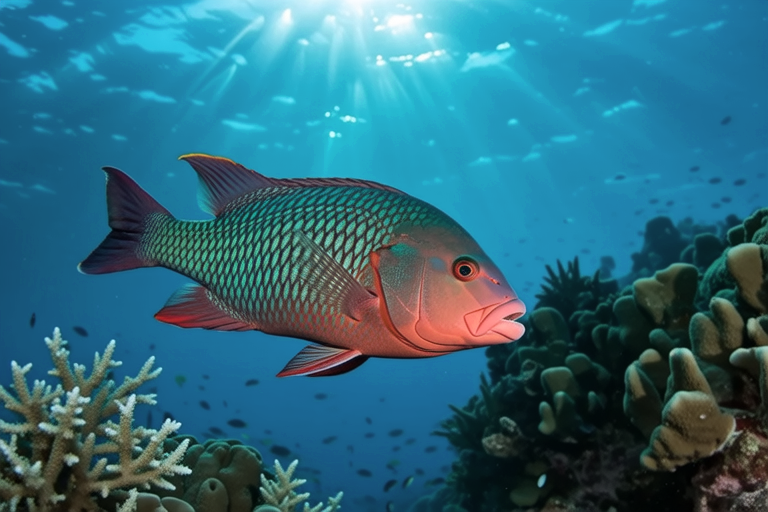
Unleashing the Secrets of the Vibrant Parrot Fish: Nature’s Underwater Artists
The ocean’s colorful tapestry is home to a myriad of creatures, each contributing uniquely to the marine ecosystem. Among the most dazzling inhabitants of this aquatic world are the parrot fish. These vibrant creatures are not only visually stunning but also play a crucial role in maintaining the health of coral reefs. This article delves into the world of parrot fish, exploring their unique appearance, vital roles in marine ecosystems, fascinating life cycles, social behaviors, and the challenges they face.
A Kaleidoscope of Colors
Parrot fish are instantly recognizable due to their striking appearance. They come in a wide array of colors, ranging from electric blues and greens to fiery reds and oranges. Their name derives from their beak-like mouths, which are equipped with teeth fused into a parrot-like beak. This characteristic, along with their vibrant hues, makes them one of the most visually appealing species in the ocean.
These fish can grow up to three feet in length, and their scales are often adorned with intricate patterns that seem to shift and change as they swim. The diversity in coloration among different species of parrot fish reflects their adaptability to various marine environments. Their bright colors serve not only as a defense mechanism, confusing potential predators, but also as a means of communication within their species.
Custodians of Coral Reefs
Parrot fish are vital for the health of coral reefs, acting as nature’s gardeners. Their diet primarily consists of algae, which they scrape off coral with their beaks. This feeding habit helps to control algal growth, preventing it from smothering corals. By doing so, parrot fish ensure that corals have sufficient sunlight and space to thrive.
Moreover, their digestive process has an unexpected benefit. As they digest the algae, they excrete fine sand, contributing significantly to the formation of beaches. In some cases, up to 80% of the sand found in tropical islands is derived from the waste of parrot fish. This process highlights the interconnectedness of marine and terrestrial ecosystems, emphasizing the importance of preserving these fish.
A Journey Through Life
The life cycle of parrot fish is as fascinating as their appearance. During the spawning season, usually triggered by the lunar cycle, males establish territories and engage in elaborate courtship displays to attract females. These displays involve changing colors, swimming in zigzag patterns, and producing sounds that echo through the water.
Once mating occurs, the female releases her eggs into the water, where they are fertilized by the male. The eggs are then carried away by currents, dispersing over vast distances. After hatching, the larvae drift in the open sea for several weeks before settling on the reef. Here, they undergo a dramatic transformation, developing into juvenile fish that resemble their adult counterparts.
The transition from larvae to juvenile is a critical stage in their development. Juvenile parrot fish are more vulnerable to predation and environmental changes, making their survival rate relatively low. However, those that survive grow rapidly, reaching sexual maturity within a few years.
Social Interactions and Behaviors
Parrot fish exhibit complex social behaviors within their underwater communities. While they are generally solitary feeders, they gather in schools during non-feeding periods, especially when resting or migrating. These schools provide safety in numbers, deterring predators and facilitating communication.
Communication among parrot fish is rich and varied. They use visual signals, such as changing colors, and auditory signals, like grunts and clicks, to convey messages. These interactions can range from territorial disputes to courtship rituals, demonstrating the depth of their social structures.
Interestingly, parrot fish are known to sleep in a state of semi-consciousness, where they remain partially aware of their surroundings. This behavior is thought to protect them from nocturnal predators while still allowing them to rest. Their ability to balance alertness and relaxation underscores the sophisticated nature of their survival strategies.
Threats and Conservation Efforts
Despite their importance, parrot fish face numerous threats. Overfishing poses a significant danger, as they are prized for their meat and vibrant skin, which is sometimes used in jewelry. Habitat destruction, caused by pollution and coastal development, further reduces their living space and food sources.
Climate change also impacts parrot fish indirectly by affecting the health of coral reefs. Rising sea temperatures lead to coral bleaching, reducing the availability of habitats and food sources for these fish. Additionally, ocean acidification weakens coral structures, making it harder for parrot fish to maintain their feeding grounds.
To combat these threats, various conservation efforts are underway. Marine protected areas (MPAs) have been established to safeguard critical habitats and limit fishing activities. Educational campaigns aim to raise awareness about the importance of parrot fish and encourage sustainable fishing practices. Research initiatives focus on understanding the biology and ecology of parrot fish better, providing valuable data for informed conservation policies.
The Importance of Preservation
Understanding and preserving parrot fish is crucial for marine biodiversity. Their role in maintaining coral reefs ensures the survival of countless other species that depend on these ecosystems. By protecting parrot fish, we are safeguarding a vital link in the marine food chain and contributing to the overall health of our oceans.
Moreover, the beauty and uniqueness of parrot fish inspire wonder and appreciation for the natural world. Their vibrant colors and intricate behaviors remind us of the complexity and richness of marine life. Preserving these fish not only benefits the environment but also enriches our cultural and aesthetic experiences.
In conclusion, parrot fish are more than just colorful marvels of the ocean; they are essential components of marine ecosystems. By learning about their lives and addressing the challenges they face, we can work towards ensuring their continued existence and the health of the seas they inhabit.