
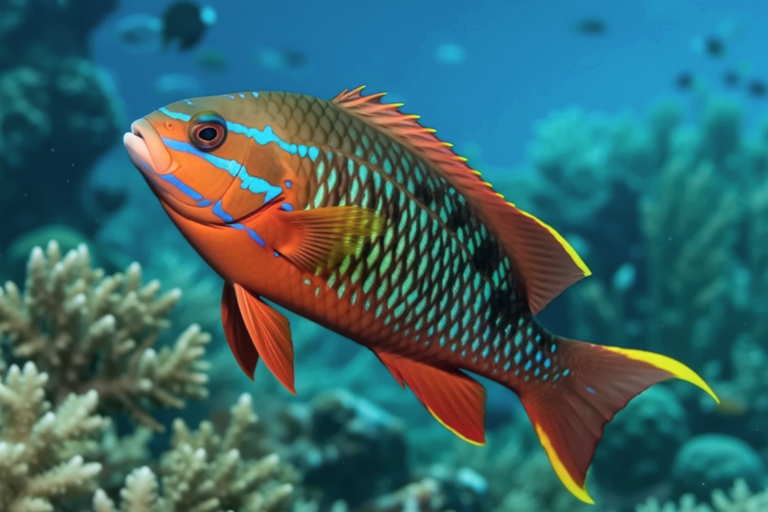
Parrot Fish: The Rainbow Warriors of the Reef You Need to Know
Beneath the shimmering surface of tropical oceans, where sunlight dances through crystal-clear waters and coral reefs pulse with life, a silent revolution is underway. It’s not the roar of waves or the flash of a shark—but the gentle crunch of teeth on rock, the soft rustle of scales against sand, and the dazzling spectacle of living rainbows gliding through underwater cathedrals. Welcome to the world of the parrotfish—the true rainbow warriors of the reef.
With hues that rival the most vibrant sunsets—electric blues, fiery oranges, deep purples, and lime greens—parrotfish aren’t just beautiful; they’re essential architects of the ocean’s most fragile yet magnificent ecosystems. These colorful creatures are more than just eye candy for divers and snorkelers. They are nature’s master landscapers, algae controllers, and even sandmakers, playing a role so vital that without them, coral reefs might not survive.
### A Living Palette: The Parrotfish’s Stunning Appearance
Imagine a fish that looks like it was painted by a celestial artist—each scale a brushstroke of iridescent color. Parrotfish are among the most visually striking inhabitants of the reef. Their bodies ripple with patterns that shift depending on mood, time of day, and social status. Some species can appear in bold, banded stripes during the day, only to fade into softer pastels at night. Others transform entirely as they age—changing from juvenile yellows and grays to flamboyant adults adorned with neon fins and intricate markings.
But their most remarkable feature isn’t their beauty—it’s their beak-like mouth. Unlike most fish, parrotfish have fused teeth that form a hard, parrot-like beak. This adaptation allows them to scrape algae off coral surfaces with astonishing precision. With a powerful snap, they chomp down on coral, not to destroy it, but to feast on the algae growing within. It’s a delicate act of destruction and creation—one that shapes entire reef systems.
### The Beak That Builds Reefs: How Parrotfish Shape the Ocean Floor
Here’s where things get truly magical. When a parrotfish bites into coral, it doesn’t just eat the algae. It also takes in chunks of the coral skeleton itself. Inside its gut, this rocky material undergoes a slow, natural digestion process—minerals break down, and what emerges is not waste, but fine, white sand.
Yes, you read that right: **one parrotfish can produce up to 200 pounds (90 kilograms) of sand per year**. Over decades, the collective effort of millions of parrotfish transforms vast stretches of reef into the powdery beaches we love. Think about the pristine white shores of tropical islands like Hawaii, the Maldives, or the Bahamas—much of that sand began its journey inside a parrotfish.
This isn’t just poetic imagery. It’s science. Coral skeletons are made of calcium carbonate—a mineral that, when broken down and excreted, becomes the foundation of sandy seabeds. Without parrotfish, these beaches would erode faster, and entire island ecosystems could collapse under the weight of rising seas and storm surges.
### Guardians of the Reef: Masters of Algae Control
Coral reefs are complex ecosystems built on balance. Algae, while essential in small amounts, can become a deadly threat when left unchecked. Too much algae smothers coral polyps, blocking sunlight and preventing them from feeding and growing. Invasive algal blooms can lead to widespread coral death—an ecological domino effect.
Enter the parrotfish: nature’s ultimate weed whacker. By grazing on algae-covered coral, they keep algal populations in check. Their constant nibbling prevents algae from taking over and gives corals a fighting chance to recover from bleaching events or storms. In healthy reef systems, parrotfish are the unsung heroes ensuring that coral remains dominant—and resilient.
Their feeding behavior is methodical and purposeful. They don’t just graze randomly. Instead, they follow specific patterns, moving across reef zones like diligent gardeners. Some species prefer shallow lagoons, others thrive in deeper channels. Their presence helps maintain the biodiversity of the reef by creating space for new coral colonies to settle and grow.
### Social Lives Beneath the Waves: Structure, Color, and Courtship
Parrotfish aren’t solitary wanderers—they live in dynamic social groups. Many species form loose schools, especially during the day when they’re feeding. But beneath this apparent chaos lies a structured society governed by dominance, color, and reproductive roles.
One fascinating aspect of parrotfish biology is their ability to change sex. Most species are sequential hermaphrodites—meaning they start life as females and later transition into males. This transformation is often triggered by social cues. If the dominant male in a group dies or leaves, one of the largest females will begin to change physically: her colors intensify, her body grows larger, and she develops male reproductive organs.
This dramatic shift is not just biological—it’s behavioral too. The newly transformed male will assert dominance, chase rivals, and court females with elaborate displays. Some species perform synchronized swimming rituals before spawning, releasing clouds of sperm and eggs into the water column. These “spawning aggregations” often occur at dusk or dawn, adding a mysterious, almost cinematic quality to the reef at twilight.
Even more intriguing is their nighttime routine. As the sun sets, parrotfish retreat to safe crevices or burrow into the sand. Before settling in, many species secrete a mucus cocoon around their bodies—a protective barrier that masks their scent from predators like eels and moray snakes. This sleeping sack is both a shield and a secret, a nightly ritual that ensures their survival through the dark hours.
### The Hidden Threats: Why Parrotfish Are in Peril
Despite their critical role, parrotfish face mounting threats—from human activity and climate change to unsustainable fishing practices. In many parts of the world, parrotfish are targeted for their meat, which is considered a delicacy in some coastal communities. They’re often caught using traps, nets, and spear guns, sometimes in large numbers during spawning seasons.
The result? Declining populations. In regions like the Caribbean and Southeast Asia, parrotfish numbers have plummeted due to overfishing. When these key grazers disappear, algae run rampant. Coral reefs become smothered, losing their resilience and turning into barren wastelands dominated by seaweed.
Habitat destruction compounds the problem. Coastal development, pollution, and sediment runoff degrade reef environments, making it harder for parrotfish to find food and shelter. Climate change further stresses the system—rising sea temperatures cause coral bleaching, reducing the availability of both food and habitat for parrotfish.
And here’s the irony: the very people who depend on healthy reefs for tourism, fishing, and coastal protection are often the ones contributing to their decline. Without parrotfish, the reefs lose their ability to regenerate. Beaches erode. Fisheries collapse. Entire economies crumble.
### Conservation Efforts: Hope on the Horizon
But there is hope. Across the globe, scientists, conservationists, and local communities are rallying to protect parrotfish and restore reef health.
In places like Belize and the Bahamas, parrotfish have been legally protected—banning their capture and sale. These laws are proving effective: where parrotfish populations rebound, coral cover increases, and reef resilience improves dramatically. In some areas, researchers have documented a 50% rise in live coral within just five years of implementing protections.
Education campaigns are also raising awareness. Divers and snorkelers now learn to identify parrotfish and understand their importance—not just as stunning animals, but as ecosystem engineers. Schools in tropical nations teach children about the link between fish, sand, and beaches, fostering a new generation of ocean stewards.
Marine protected areas (MPAs) are another lifeline. By restricting fishing and other damaging activities in designated zones, MPAs allow parrotfish populations to rebuild naturally. Scientists monitor these areas closely, tracking changes in coral health, algae levels, and fish diversity. The results are clear: protected reefs thrive.
Community-led initiatives are equally powerful. In some Pacific islands, traditional fishing practices are being revived with modern conservation principles. Elders pass down knowledge about sustainable harvesting, while youth engage in reef cleanups and citizen science projects. These efforts blend culture, ecology, and hope.
### A Call to Action: Protect the Rainbow Warriors
The next time you stand on a sun-drenched beach, feel the soft sand between your toes, and gaze out at a turquoise sea, take a moment to remember how that sand got there. It wasn’t magic. It was the work of thousands of tiny, colorful fish—parrotfish—whose quiet, relentless chewing has shaped our world.
These aren’t just pretty fish. They are guardians, builders, and healers. They remind us that nature’s solutions are elegant, interconnected, and deeply intelligent. But they need our help.
You don’t need to be a marine biologist to make a difference. Here’s how you can join the movement:
– **Support sustainable seafood:** Avoid eating parrotfish and ask restaurants about their sourcing policies.
– **Choose eco-friendly travel:** When visiting tropical destinations, opt for dive operators and tour companies committed to reef conservation.
– **Spread the word:** Share stories like this one. Awareness is the first step toward action.
– **Advocate for protection:** Encourage local governments and international organizations to establish and enforce marine protected areas.
– **Reduce your footprint:** Cut down on plastic use, lower carbon emissions, and support policies that combat climate change—because healthy reefs depend on healthy oceans.
Every choice matters. Every voice counts.
### Final Thoughts: The Future Is Brighter Than the Reef
Parrotfish may not wear capes or speak to crowds, but they are true champions of the underwater world. With every bite they take, they build sand. With every stroke of their tail, they preserve coral. With every color shift, they tell a story of survival, adaptation, and balance.
They remind us that beauty and function are not opposites—they are partners. In the ocean’s grand design, no creature is superfluous. Not even the smallest, most vibrant fish.
So the next time you see a parrotfish darting through a coral labyrinth, glowing like a jewel in the deep, pause. Watch it. Marvel at it. And know this: in its beak lies the future of an entire ecosystem.
Let’s protect it—not just for the fish, but for ourselves. For the beaches we love, the reefs we cherish, and the generations yet to come.
Because the rainbow warriors are counting on us.