
5 Unbelievable Facts About Siberian Huskies That Will Blow Your Mind
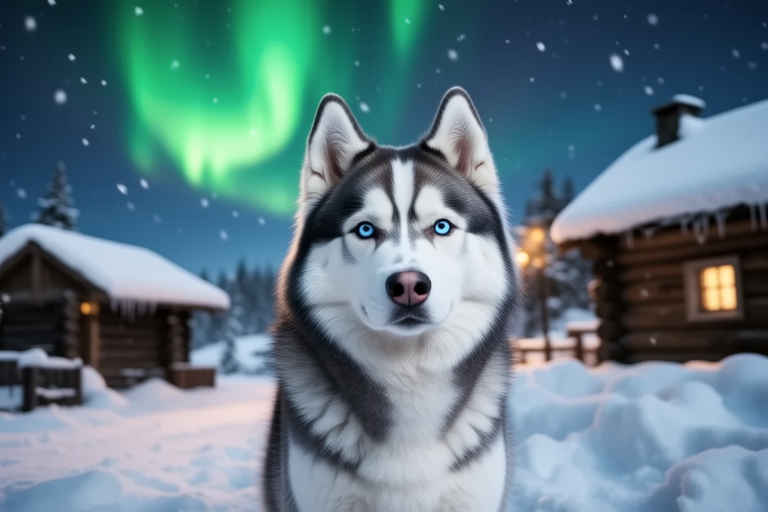
Imagine a dog with eyes that look like twin sunsets, a coat so thick it could double as a winter sleeping bag, and a personality that’s equal parts mischievous genius and loyal shadow. Now picture this creature not just surviving—but thriving—in the frozen tundra of Siberia, where temperatures plummet below -50°F. That’s the Siberian Husky: a breed so perfectly engineered by nature that it defies logic, science, and even common sense. While most people know them for their striking looks and love of pulling sleds, there’s a whole world of jaw-dropping facts hidden beneath their fluffy exterior.
From ancient Arctic survival skills to uncanny sensory abilities, these dogs are far more than just Instagram-worthy mascots. They’re living legends with secrets buried in their DNA, behavior, and history. In this article, we’re diving deep into five mind-blowing facts about Siberian Huskies—facts so surprising, you’ll swear they’re made up. But trust us, every one is 100% true.
1. Their Eyes Can Change Color—and Even Have Two Different Colors
Let’s start with one of the most mesmerizing features of the Siberian Husky: their eyes. Unlike most dogs, whose eye color stays consistent from puppyhood, Huskies have a unique genetic quirk that allows their eye color to shift dramatically—or even create a stunning dual-eyed effect.
At birth, most Husky puppies are born with bright blue eyes. But as they grow, their pigmentation can change due to a phenomenon called “eye color polymorphism.” This means that some Huskies develop eyes that range from deep amber to icy gray, and even green or hazel—colors rarely seen in purebred dogs. What makes it truly wild? Some Huskies are heterochromatic, meaning each eye is a different color—one blue, one brown, or one blue and one amber. It’s like nature painted two separate masterpieces on one face.
This trait isn’t just aesthetic—it’s linked to a rare gene called the ALX4 gene, which affects both coat color and eye pigmentation. The same gene responsible for their striking markings (like the iconic “wolf mask”) also influences eye color. And here’s the kicker: unlike other breeds, this variation isn’t tied to health issues. No cataracts, no blindness—just pure, natural beauty. So next time you see a Husky with mismatched eyes, remember: you’re looking at a genetic masterpiece, not a mistake.
2. They Can Run 100 Miles Without Stopping—And Still Want More
If you think your dog gets tired after a 10-minute walk, meet the Siberian Husky—the endurance athlete of the canine world. These dogs weren’t bred for short bursts; they were built for marathon distances across endless snowfields.
Historically, Siberian Huskies were used by the Chukchi people of northeastern Siberia to haul sleds over vast, treacherous terrain. A single team could cover up to 100 miles in a single day—yes, a full hundred miles—with minimal rest. And they didn’t just survive—they thrived. Their bodies are designed for long-distance running: powerful leg muscles, efficient oxygen delivery systems, and a low metabolic rate that lets them burn fat instead of glucose during prolonged exertion.
Even today, modern Huskies retain this incredible stamina. In events like the Iditarod Trail Sled Dog Race, top teams average around 70–80 miles per day for 10 days straight. Huskies don’t just run—they *live* to run. They often get excited before a run, circling, barking, and pawing at the ground—like they’re saying, “Let’s go! I’m ready!” Their energy levels aren’t just high; they’re infinite. One study found that Huskies can maintain a steady pace of 10 mph for over 10 hours without showing signs of fatigue. That’s like a human sprinting 10 miles an hour for 10 hours—without stopping to breathe.
So if you’re thinking of adopting a Husky, be prepared: they don’t want to sit on the couch all day. They want to run through forests, hike mountain trails, or even pull a lightweight cart. Their legs aren’t just for show—they’re built for adventure.
3. They’re Masters of the “Howl” but Also Whisperers of the Wind
Everyone knows Huskies howl. It’s practically their signature move—especially when the moon is out or someone plays a certain note on a piano. But what’s less known is that their vocalizations are far more sophisticated than simple noise-making.
Huskies don’t just howl because they’re bored or lonely. Their howls are a form of communication—a complex language evolved over thousands of years in the Arctic. Scientists studying wolf and dog vocalizations have discovered that Huskies use specific pitch patterns, durations, and frequencies to convey emotions, warnings, or social signals. For example, a low, drawn-out howl might signal “I’m guarding the camp,” while a higher-pitched, rapid series of yips could mean “I see movement!”
But here’s the real mind-blower: Huskies are incredibly sensitive to wind and atmospheric changes. Many owners report their Huskies howling or becoming agitated minutes before a storm hits—even when the sky is clear. Researchers believe this sensitivity comes from their acute hearing and possibly their ability to detect subtle shifts in barometric pressure. In fact, some studies suggest that Huskies can hear sounds up to 40,000 Hz—compared to humans’ 20,000 Hz. That means they can pick up ultrasonic noises invisible to us, like the faint rustle of a fox moving through snow or the distant groan of shifting ice.
So when your Husky starts howling at midnight, it might not be because he’s sad. He could be listening to something we can’t—something ancient, primal, and deeply ingrained in his DNA.
4. They Can Survive Temperatures Below -50°F… With No Extra Clothing
Think your dog needs a sweater when it’s cold outside? Try telling that to a Siberian Husky. These dogs weren’t just born in the Arctic—they were *meant* for it. Their physiology is so advanced, they can endure temperatures that would freeze most animals solid—without even needing a dog jacket.
The secret lies in their double coat. Unlike most dogs, who have a single layer of fur, Huskies have two distinct layers: a soft, insulating undercoat and a longer, coarser outer coat. The undercoat traps warm air close to the skin, while the outer coat repels snow and moisture. Together, they create a natural thermal blanket that keeps heat in and cold out. But here’s the amazing part: their coat actually *grows thicker* in winter and sheds completely in spring—a process called “blowing coat.” During peak winter, their fur can reach up to 3 inches thick.
But it’s not just their fur. Huskies have a unique circulatory system in their paws. Their foot pads contain tiny blood vessels that constrict in extreme cold, reducing blood flow and preventing frostbite. At the same time, their body maintains core temperature through a combination of shivering and increased metabolic activity. Studies show that Huskies can generate up to 20% more body heat per pound than other breeds—making them biological heaters.
One legendary story from the early 20th century tells of a Husky named Balto who survived being left alone in a blizzard for three days. When found, he was covered in ice, but his core temperature was still stable. His fur had trapped enough warmth to keep him alive. This kind of resilience isn’t luck—it’s evolution at its finest.
So if you live in a cold climate and are considering a Husky, don’t worry about buying a winter coat. Just make sure they have shelter and water. They’ll handle the cold better than you ever will.
5. They’re Naturally Social—But Also Secretly Independent Thinkers
Here’s a paradox that defines the Siberian Husky: they’re deeply social creatures who crave companionship—yet they’re also fiercely independent, almost like furry philosophers with a mind of their own.
Unlike many breeds that obey commands like robots, Huskies were never bred to follow orders blindly. Instead, they were working partners—equal members of a team. This meant they had to think, problem-solve, and communicate with their handlers. As a result, they developed a high level of intelligence—not in obedience, but in emotional awareness and situational judgment.
Studies from the University of Helsinki found that Huskies rank among the top 10 most intelligent dog breeds in terms of understanding human gestures and facial expressions. They can interpret pointing, eye contact, and tone of voice with remarkable accuracy. But here’s the twist: while they understand what you’re saying, they don’t always *want* to comply. If they don’t like a command or sense a flaw in the plan, they’ll simply walk away or ignore it—no guilt, no hesitation.
This independence isn’t stubbornness—it’s self-confidence. Huskies are naturally curious, observant, and capable of forming strong bonds with multiple family members. They’ll greet everyone with enthusiasm, share food, and even try to comfort a crying child. Yet, they also have a playful streak that borders on mischief. You’ve probably seen videos of Huskies digging holes in the yard, escaping fences, or stealing socks—all while wearing an innocent expression.
They’re not just pets. They’re partners. And if you treat them like equals, they’ll respond with loyalty, wit, and a dash of cheeky humor.
Conclusion: More Than Just a Pretty Face
Siberian Huskies are not just beautiful dogs with fluffy coats and dramatic eyes. They’re living testaments to nature’s engineering brilliance. From their color-shifting eyes and superhuman endurance to their wind-sensitive howls and Arctic-ready bodies, every aspect of their existence screams “unbelievable.”
They’re not just pets—they’re adventurers, communicators, survivors, and thinkers. They challenge our assumptions about what dogs can do and how they think. And yet, despite their wild capabilities, they remain deeply affectionate, playful, and loyal to those they love.
If you’re considering bringing a Husky into your life, prepare for a journey unlike any other. Expect laughter, chaos, and moments of pure wonder. Because owning a Siberian Husky isn’t just about sharing space—it’s about sharing a universe of mystery, strength, and spirit.
So next time you see one of these magnificent dogs trotting through the snow, pause. Look into those piercing eyes. Listen to that howl. And remember: you’re not just seeing a dog. You’re witnessing evolution in motion—wild, brilliant, and utterly unforgettable.