
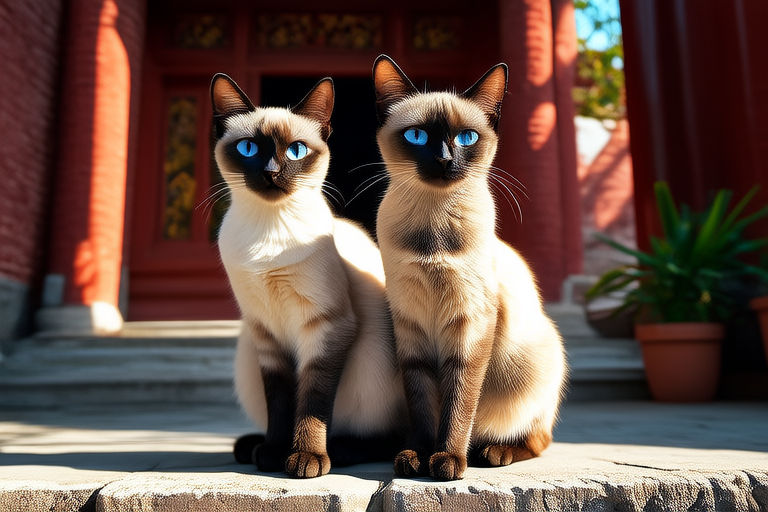
The Journey of Siamese Cats: From Temple Guardians to Social Media Stars
Introduction:
The Siamese cat, with its striking blue almond-shaped eyes, sleek coat, and vocal nature, has captured hearts around the world. Originating from ancient Siam, now Thailand, these cats were once revered as sacred temple guardians. Their journey from religious icons to beloved household pets is a fascinating tale that spans centuries. This article explores the historical origins of Siamese cats, their distinctive physical and personality traits, and their rise to social media stardom.
Historical Origins: Revered Temple Guardians
In ancient Siam, Siamese cats were highly esteemed and believed to possess supernatural powers. They were often kept in temples and palaces, where they were considered protectors of spiritual realms. The royal families of Siam held these cats in high regard, and only nobility could own them. These cats were thought to bring good fortune and ward off evil spirits. Their unique appearance and behavior were seen as divine gifts.
The earliest documented evidence of Siamese cats dates back to the 14th century, when they were mentioned in manuscripts. Legends told of how the king would gift Siamese cats to his friends and allies as symbols of trust and loyalty. The cats were believed to have the ability to sense impending danger and warn their owners, further enhancing their mystique.
Transition to Beloved Pets
The transition of Siamese cats from temple guardians to cherished family pets began in the late 19th century when British diplomats and travelers brought them back to Europe. The first Siamese cats arrived in England in 1871, and Queen Victoria became an immediate fan. Her enthusiasm sparked interest among the upper classes, leading to the breed’s popularity in Europe and later in America.
Siamese cats were introduced to the United States in the early 20th century and quickly gained favor due to their exotic appearance and engaging personalities. Their distinct physical features, including their pointed coat pattern and expressive eyes, set them apart from other breeds. The breed’s intelligence and curiosity also endeared them to their owners.
Distinctive Physical Characteristics and Personalities
Siamese cats are known for their slender, muscular bodies and long, tapering tails. Their coats are short and fine, typically featuring a light-colored body with darker points on the ears, face, paws, and tail. The most common colors are seal point, chocolate point, blue point, and lilac point. Their almond-shaped blue eyes are one of their most recognizable features, giving them an enigmatic and almost human-like expression.
Besides their striking appearance, Siamese cats are known for their vocal nature and affectionate personalities. They are highly social animals that thrive on interaction with humans. Siamese cats are often described as “dog-like” due to their loyalty and tendency to follow their owners around the house. They are intelligent and playful, making them excellent companions for active households.
Evolving Role in Society
The role of Siamese cats in society has evolved significantly over time. In addition to their traditional roles as temple guardians and companions to royalty, they have become popular pets for people from all walks of life. Their increasing visibility in media, literature, and art has contributed to their growing popularity.
One notable example of Siamese cats in literature is the 1930 novel The Gentleman’s Gentleman by Dorothy Edwards, which featured a Siamese cat named Tug. The book helped to further popularize the breed in the United States. In more recent years, Siamese cats have appeared in various films and television shows, including the 2001 Disney animated film Lilo & Stitch, where a character resembling a Siamese cat plays a significant role.
Rise to Social Media Stardom
The rise of social media platforms like Instagram, TikTok, and YouTube has played a crucial role in elevating Siamese cats to celebrity status. Viral videos and posts featuring these charismatic felines have captivated audiences worldwide, showcasing their unique personalities and antics. Many Siamese cats have gained large followings on social media, with some even becoming influencers.
One such Siamese cat is Maru, a Japanese cat who rose to fame with his YouTube channel dedicated to his daily adventures. Another famous Siamese cat is Grumpy Cat, whose perpetually grumpy facial expression went viral on social media. These cats, along with others like Lil BUB and Colonel Meow, have helped to increase awareness and appreciation for the breed.
The impact of social media on changing perceptions and increasing the popularity of the breed cannot be overstated. Platforms like Instagram allow cat owners to share photos and videos of their pets with millions of followers, fostering a global community of cat lovers. This has led to increased interest in adopting Siamese cats and other purebred breeds.
Anecdotes and Profiles of Famous Siamese Cats
Maru, born in 2006, is perhaps the most famous Siamese cat on social media. His owner, Nekojirushi, started uploading videos of Maru’s antics to YouTube in 2008. Maru’s signature move is climbing into boxes, and his videos have garnered millions of views. Maru’s popularity has inspired merchandise, books, and even a documentary about his life.
Grumpy Cat, born in 2012, is another well-known Siamese mix. Her owner, Tabatha Bundesen, posted a photo of her on Reddit in 2012, which quickly went viral. Grumpy Cat’s perpetually grumpy expression, combined with her internet fame, has led to numerous appearances in media and products. She has starred in her own reality show and has been featured in advertisements for various brands.
Impact of Social Media on Pet Culture
The journey of Siamese cats from temple guardians to social media stars reflects broader trends in pet culture and human-animal relationships. Social media has transformed the way we interact with our pets, allowing us to share moments of joy and connection with a global audience. This has led to increased awareness of animal welfare issues and the importance of responsible pet ownership.
The rise of influencer pets has also contributed to the commodification of certain breeds, with some owners seeking out specific breeds for their social media appeal rather than their suitability as pets. However, it has also highlighted the need for ethical breeding practices and responsible adoption.
Conclusion
The journey of Siamese cats from revered temple guardians in ancient Siam to social media stars today is a testament to the enduring appeal of these fascinating creatures. Their distinctive physical characteristics and engaging personalities have made them beloved pets for centuries. The rise of social media has further enhanced their popularity, bringing them into the homes and hearts of millions of people around the world.
The journey of Siamese cats reflects broader trends in pet culture and human-animal relationships. As we continue to embrace pets as integral members of our families, it is important to remain mindful of the responsibilities that come with pet ownership. By promoting ethical breeding practices and responsible adoption, we can ensure that future generations of Siamese cats will continue to thrive and bring joy to many.