
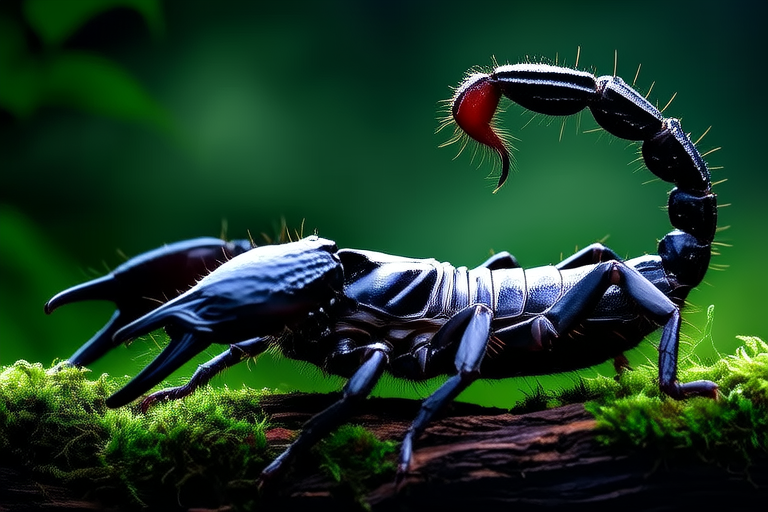
Unraveling the Secrets of the Hairy Night Stalker: All About Heterometrus Spinifer
The world of arachnids is vast and diverse, filled with creatures that captivate and sometimes terrify us. Among these, the Heterometrus spinifer, commonly known as the Hairy Night Stalker, stands out with its unique appearance and intriguing behaviors. This article delves into the mysteries surrounding this fascinating species, from its physical characteristics to its role in the ecosystem.
A Unique Appearance
The Heterometrus spinifer is a medium-sized scorpion, typically ranging from 6 to 9 centimeters in length. Its most distinctive feature is its dense covering of fine hairs, which give it its common name. These hairs are not only aesthetically striking but also serve important functions, such as sensory perception and protection against predators. The coloration of the Hairy Night Stalker varies, usually between shades of brown and black, allowing it to blend seamlessly into its surroundings.
Natural Habitat and Distribution
Native to Southeast Asia, particularly in regions like Thailand, Malaysia, and Indonesia, the Hairy Night Stalker thrives in tropical and subtropical environments. It prefers humid conditions and can be found in various habitats, including rainforests, swamps, and even urban areas. Adaptability is key to its survival; the species has successfully colonized different ecosystems, from dense jungles to agricultural fields. This adaptability is attributed to its ability to withstand varying levels of humidity and temperature, making it a resilient species.
Nocturnal Activities and Hunting Techniques
As its common name suggests, the Hairy Night Stalker is predominantly nocturnal. It emerges at dusk, seeking sheltered spots during the day to avoid harsh sunlight. Its hunting techniques are both efficient and stealthy. Using its pincers and stinger, the scorpion captures prey, often smaller insects like crickets and beetles. Interestingly, the Hairy Night Stalker also employs vibrations to detect potential victims, enhancing its hunting success in low-light conditions.
Diet and Feeding Habits
The diet of the Hairy Night Stalker primarily consists of small insects, though it may occasionally consume other arthropods. One of its most remarkable feeding habits is its ability to paralyze prey with venom before consuming it. This venom, while potent enough to subdue its meals, is generally non-lethal to humans, causing mild pain and swelling if stung. Despite the venom’s reputation, it serves as a crucial adaptation for hunting and defense.
Reproduction Methods and Life Cycle Stages
The reproductive process of the Hairy Night Stalker involves a complex courtship ritual, followed by mating. Females carry fertilized eggs internally, giving birth to live young after several months. These newborns, called scorplings, are initially carried on the mother’s back for protection and nourishment. As they mature, scorplings undergo several molting stages, gradually developing into adults. This extended parental care ensures higher survival rates among offspring.
Interactions with Humans
Throughout history, the Hairy Night Stalker has been both feared and revered. In many cultures, it is seen as a symbol of strength and resilience. However, there are also numerous myths and misconceptions surrounding the species. One common myth is that all scorpions are highly dangerous to humans, which is not true for the Hairy Night Stalker. While it is capable of delivering a painful sting, its venom is rarely life-threatening to humans. Awareness campaigns are essential to dispel such myths and promote coexistence with this remarkable creature.
Conservation Status and Efforts
Despite its adaptability, the Hairy Night Stalker faces threats due to habitat destruction and pollution. Urbanization and deforestation have reduced suitable habitats, impacting population numbers. Conservation efforts are underway to protect this species, including habitat restoration projects and educational initiatives. By raising awareness and implementing protective measures, we can ensure the continued existence of the Hairy Night Stalker for future generations.
In conclusion, the Hairy Night Stalker, or Heterometrus spinifer, is a captivating species with a rich array of adaptations and behaviors. From its unique appearance to its intricate life cycle, this scorpion offers valuable insights into the complexity of nature. Understanding and appreciating the Hairy Night Stalker not only enriches our knowledge of biodiversity but also underscores the importance of conservation efforts. Let us continue to explore and protect these hidden wonders of the animal kingdom.